
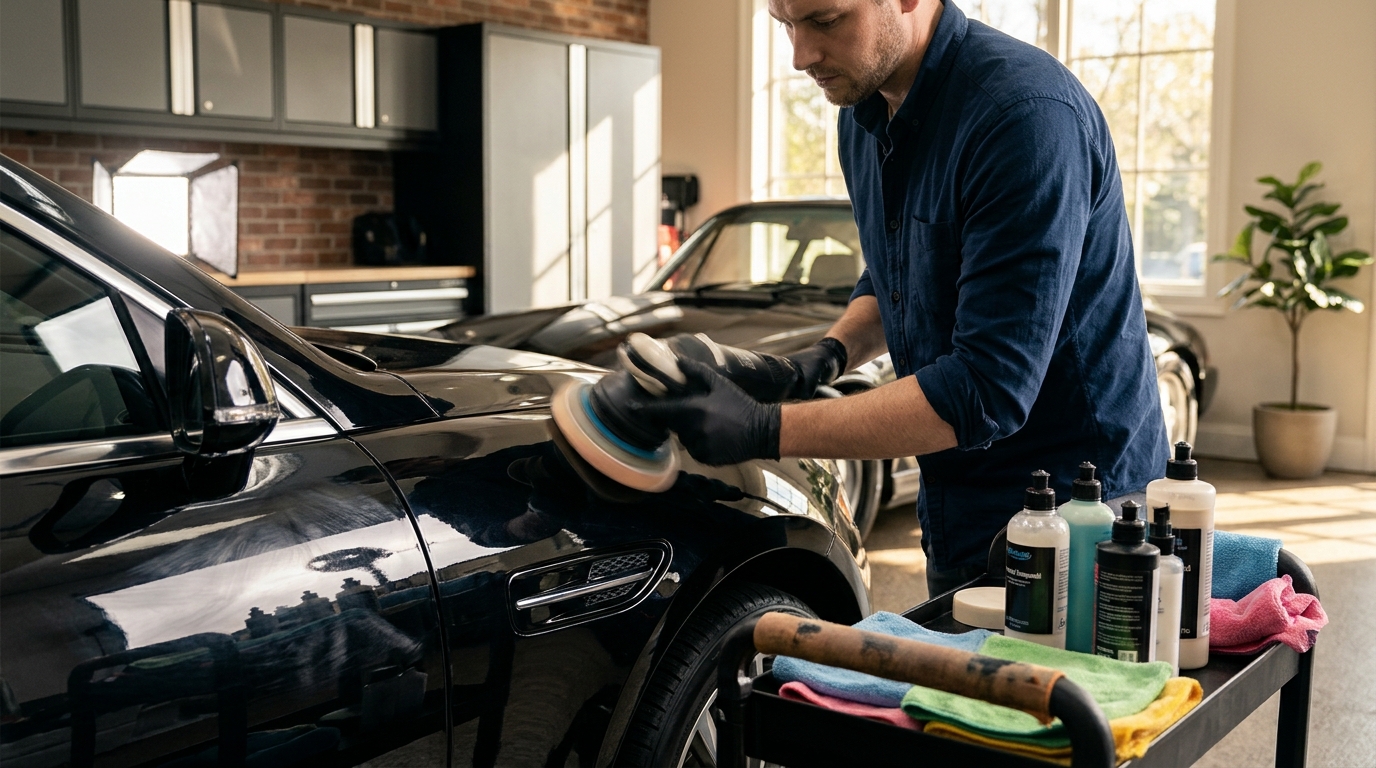
Professional paint correction is a multi-stage process that removes surface defects to restore a vehicle's factory finish. It involves careful preparation, mechanical polishing, and protective sealing to ensure long-lasting results. At Phenomenal Auto Care, we follow a rigorous protocol to safely enhance your vehicle's appearance without damaging the clear coat.
1. Initial Inspection and Paint Depth Measurement
Accurate assessment determines the safe polishing limits for your specific vehicle. Before any machine touches the paint, a professional must evaluate the condition of the clear coat. We use a paint depth gauge to measure the thickness of the clear coat in multiple areas. This step ensures we do not remove more material than is safe, preventing permanent damage to the underlying color coat.
2. Decontamination Wash
Removing loose dirt prevents immediate scratching during the polishing process. The first physical step is a thorough pre-wash and hand wash. This removes loose road grime, dust, and debris that would otherwise act like sandpaper under a polishing pad. We use pH-neutral shampoos to ensure the paint is clean and safe for the next stages of correction.
3. Chemical Decontamination and Iron Removal
Embedded contaminants must be dissolved before mechanical polishing can begin. Even after a wash, microscopic particles like iron fallout and tree sap remain bonded to the paint. We apply iron decontamination solutions that react with these particles, turning them purple or blue before rinsing them away. This step is critical for achieving a perfectly smooth surface.
4. Clay Bar Treatment
Clay bars physically lift bonded contaminants that chemicals cannot remove. A clay bar is a pliable synthetic material used to glide over the paint surface. It picks up embedded particles such as industrial fallout and overspray that are too hard to dissolve chemically. This process leaves the paint feeling glass-smooth, which is essential for effective polishing.
5. Machine Polishing and Defect Removal
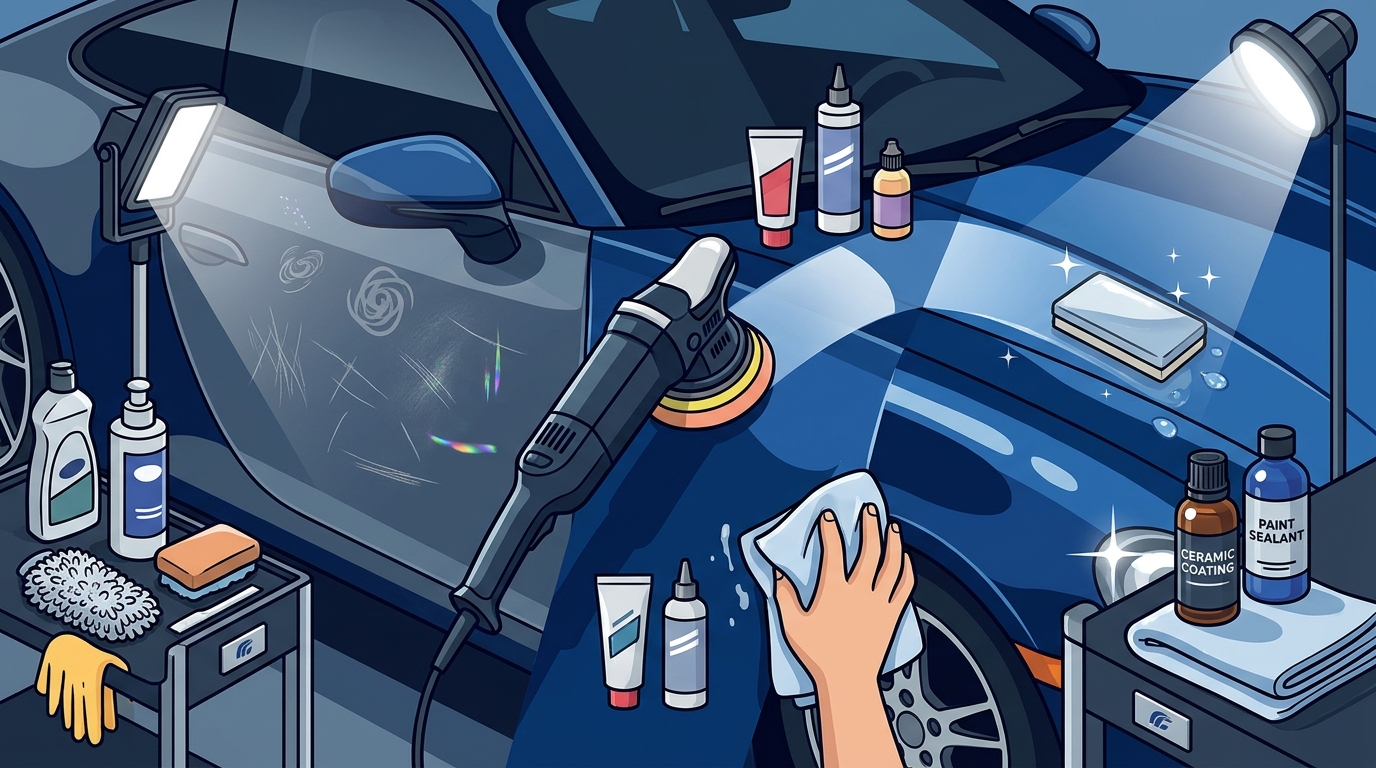
Machine polishing is the core step that physically removes swirls and scratches. Using a dual-action polisher and specific compounds, we mechanically abrade the top layer of the clear coat. This step requires precision to remove defects like holograms, swirl marks, and light scratches. We often use a two-stage process, starting with a heavier cut and finishing with a gloss-enhancing polish.
6. Final Inspection and Residue Removal
Polishing oils must be removed to reveal the true clarity of the corrected paint. After polishing, the paint is covered in a thin film of polishing residue. We perform a final solvent wipe or wash to remove this residue. This allows us to inspect the paint under bright lights to ensure all defects have been removed and the finish is uniform.
7. Protective Coating Application
Applying a protective layer seals the corrected paint and extends its lifespan. Once the paint is corrected, it is vulnerable to new environmental damage. We apply a ceramic coating or paint sealant to protect the new finish. This step adds hydrophobic properties, making the car easier to clean and more resistant to UV fading and chemical etching.
Choosing the Right Correction Level
Selecting the appropriate correction level depends on the severity of the defects. Light swirls may only require a single-stage enhancement polish, while deep scratches need a two-stage correction. At Phenomenal Auto Care, we assess your specific paint condition to recommend the most effective and safe approach for your vehicle.
Frequently Asked Questions
How long does professional paint correction take?
The duration depends on the vehicle size and the severity of the defects. A single-stage correction on a sedan typically takes 4 to 6 hours, while a two-stage correction on an SUV can take a full day or more.
Will paint correction remove deep scratches?
Paint correction can remove scratches that are only in the clear coat. If a scratch penetrates through the clear coat into the color coat or primer, it cannot be removed by polishing and requires touch-up paint or repainting.
Is paint correction safe for all paint types?
Yes, when performed by a professional who measures paint depth first. Modern clear coats are durable, but improper technique can thin the clear coat. We always measure the paint depth to ensure safe polishing limits.
How long do the results of paint correction last?
The corrected finish lasts as long as the protective layer applied over it. A ceramic coating can last several years, while a paint sealant typically lasts 3 to 6 months. Regular maintenance washing helps preserve the results.
Can I do paint correction myself?
While DIY kits exist, professional equipment and technique yield significantly better results with less risk of damage. Professionals have access to high-quality compounds, pads, and polishers that are not available to consumers.