
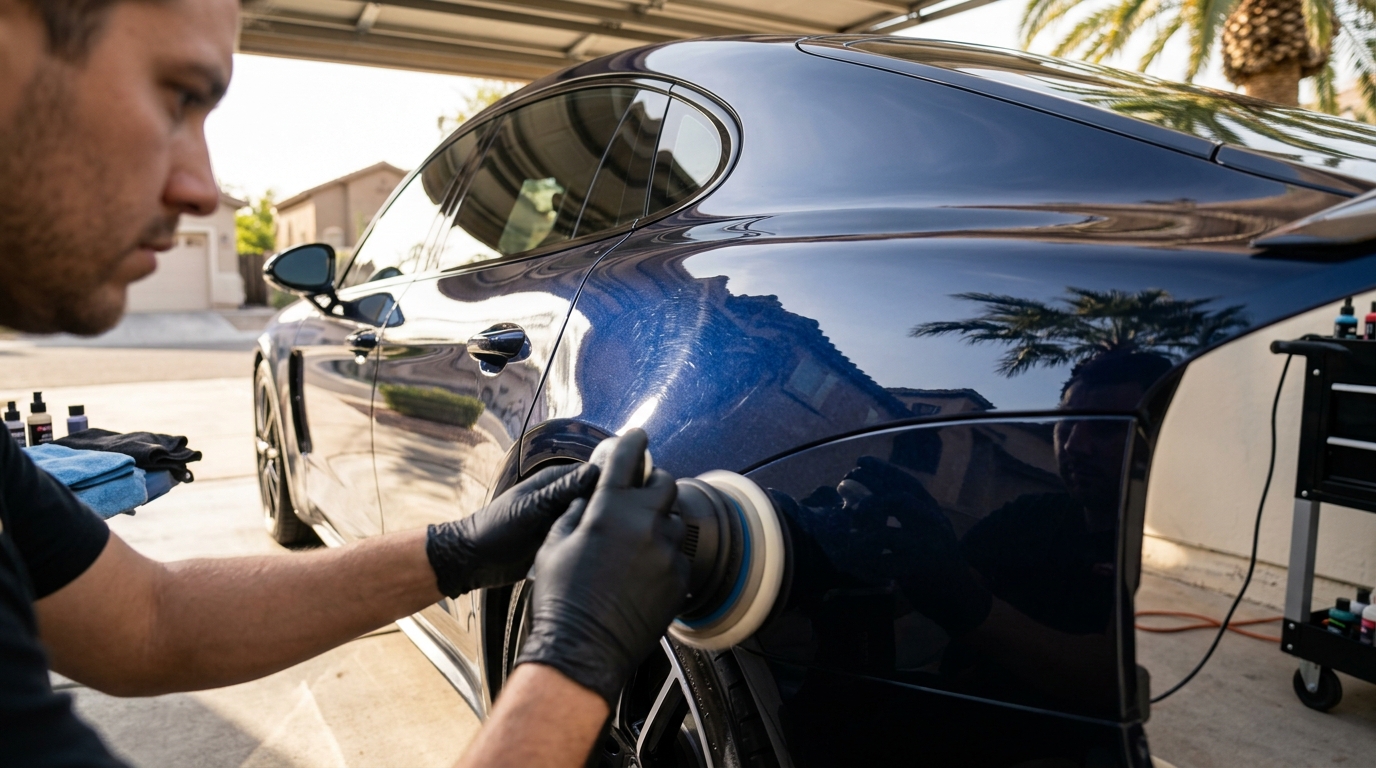
Paint correction is a mechanical process that levels the top layer of your vehicle's clear coat to remove surface defects like swirl marks, light scratches, and oxidation. By physically removing a microscopic amount of paint, it restores the smooth, reflective surface that makes your car look glossy and deep. This process is the essential foundation for long-term protection, ensuring that any subsequent sealant or ceramic coating bonds perfectly to a flawless base.
The Mechanics of Gloss Restoration
When you look at a car's paint, you are seeing how light reflects off the surface. A factory-fresh finish is perfectly smooth, allowing light to reflect in a single, sharp direction. Over time, environmental factors and improper washing create microscopic peaks and valleys in the clear coat. These imperfections scatter light in multiple directions, which is why your car looks dull, hazy, or "washed out."
Paint correction works by using abrasive compounds and machine polishing to level these peaks. Think of it like sanding a piece of wood. You are not adding anything to the paint; you are removing the damaged top layer to reveal the pristine, smooth paint underneath. This is why the process is called "correction" rather than "enhancement." It corrects the physical geometry of the surface. For a vehicle in the Arizona climate, where UV exposure and dust are constant threats, this mechanical leveling is the only way to truly restore that showroom shine.
Defect Removal Capabilities and Limits
It is crucial to understand what paint correction can and cannot fix. The process is highly effective for optical defects that exist only in the clear coat. This includes swirl marks from automatic car washes, holograms from previous polishing attempts, and light oxidation caused by sun exposure. A professional one-step correction can typically remove 50 to 85 percent of these visible defects, depending on the severity of the damage.
However, paint correction has hard limits. It cannot fix physical damage where paint is missing. If you have rock chips, deep scratches that catch your fingernail, or peeling clear coat, polishing will not bring that paint back. In fact, polishing over failing clear coat can make the damage worse by tearing the edges. At Phenomenal Auto Care, we always assess the depth of the damage first. If a defect is too deep, we recommend alternative solutions like touch-up paint or Paint Protection Film (PPF) rather than forcing a polish that could thin the paint dangerously.
The Arizona Climate Factor
Living in the East Valley presents unique challenges for vehicle finishes. The intense Arizona sun accelerates oxidation, causing paint to fade and lose its color depth. Additionally, monsoon dust and hard water spots can etch into the clear coat if not removed promptly. These environmental aggressors create a layer of "grime" and chemical damage that standard washing cannot remove.
Paint correction is the reset button for these conditions. By removing the oxidized and etched layer, we restore the original color and clarity of the paint. This is particularly important for dark colors like black or deep blue, which show swirls and haze more prominently than lighter shades. A corrected finish in Chandler or Gilbert doesn't just look better; it reflects the local light in a way that highlights the vehicle's curves and design lines, making it stand out on the road.
Foundation for Long-Term Protection
One of the most misunderstood aspects of paint correction is its role in protection. Many owners think that applying a ceramic coating is the end goal, but the correction is the prerequisite. Coatings and sealants are designed to bond to a smooth, clean surface. If you apply a ceramic coating over a swirled or oxidized paint job, you are essentially sealing in the defects. The coating will make the car look glossy for a while, but the underlying damage will still be visible under close inspection, and the coating may not last as long.
By performing a thorough paint correction first, we create a perfectly smooth canvas. This allows a ceramic coating to bond at a molecular level, providing superior hydrophobic properties and UV resistance. The result is a finish that is not only beautiful but also significantly more durable. It repels water, dirt, and contaminants more effectively, making future maintenance washes easier and less frequent.
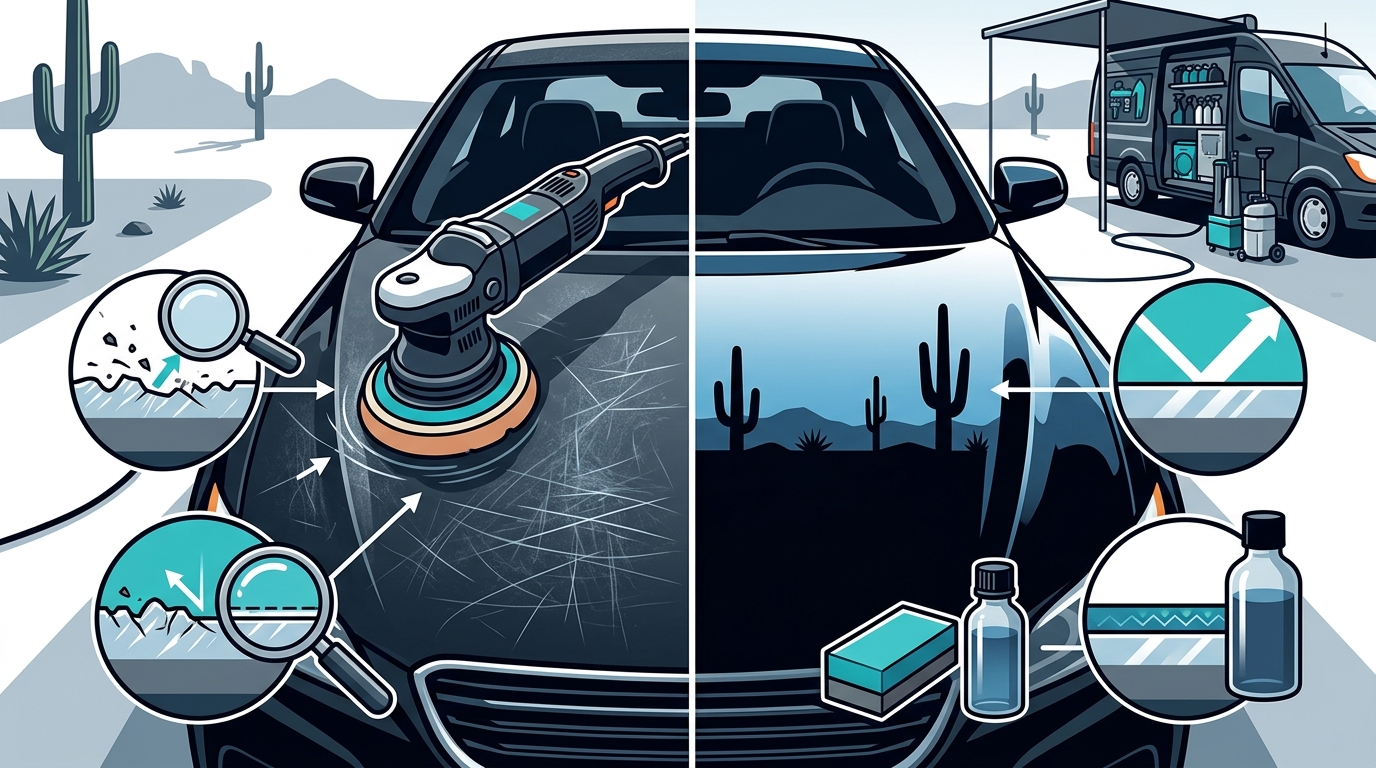
Professional vs. DIY Correction
With the rise of online detailing tutorials, many car owners attempt paint correction at home. While a one-step polish on a newer car with light swirls can be a manageable DIY project, multi-stage corrections are high-risk for amateurs. The difference between a professional and a DIY job often comes down to paint thickness measurement and heat management.
Professionals use paint depth gauges to ensure they are not removing too much clear coat. Over-polishing can thin the paint to the point where it becomes translucent or fails entirely. At Phenomenal Auto Care, we measure the clear coat thickness before we start. This ensures that we can safely remove the defects while leaving a healthy layer of paint for future corrections. For high-value vehicles or those with significant damage, professional intervention is the safest route to a lasting, mirror-like finish.
Key Takeaways
- Paint correction is a mechanical process that removes a microscopic layer of clear coat to level surface defects.
- It effectively removes swirl marks, light scratches, and oxidation, restoring gloss and depth.
- It cannot fix rock chips, deep scratches, or peeling paint where material is missing.
- Correction is the essential foundation for ceramic coatings and sealants to bond properly.
- Arizona's sun and dust accelerate paint degradation, making correction a vital maintenance step.
- Professional services use paint depth gauges to ensure safe, long-lasting results without thinning the paint.
Frequently Asked Questions
How long does paint correction last?
Paint correction itself is permanent in the sense that the defects are removed. However, the gloss will degrade over time due to environmental exposure. Applying a sealant or ceramic coating after correction can protect the finish for months to years, depending on the product and maintenance habits.
Will paint correction remove rock chips?
No. Rock chips are physical damage where paint is missing. Polishing cannot bring back missing paint. For chips, you will need touch-up paint or a full repaint of the affected area.
Is paint correction safe for all car colors?
Yes, but dark colors like black require more precision. Because dark paint shows imperfections more clearly, it often requires a more careful, multi-stage approach to avoid leaving new swirls or holograms.
How often should I get paint correction?
Most vehicles do not need full correction every year. A light enhancement polish every 12 to 18 months is usually sufficient for maintenance. Full multi-stage correction is typically only needed if the paint has suffered significant damage or oxidation.
Can I wash my car after paint correction?
Yes, but you should wait 24 to 48 hours before washing to allow any applied sealant or coating to fully cure. After that, use a gentle, pH-neutral shampoo and microfiber towels to avoid introducing new swirls.
Conclusion
Paint correction is more than just a cosmetic upgrade; it is a structural restoration of your vehicle's finish. By removing the physical defects that scatter light, it brings back the depth and clarity that fades over time. For drivers in the Phoenix metro area, this service is essential for combating the harsh local climate. If you are ready to restore your car's appearance, contact Phenomenal Auto Care to schedule a professional assessment and correction.